


eSIM vs. SIM Card: Which Is Better for International Travel in 2026?
eSIM or SIM card for international travel? Compare costs, convenience, and compatibility to find the best way to stay connected abroad in 2026.
eSIM 용어
통계와 가이드 링크가 포함된 짧은 정의. 여행 eSIM 용어집 열기
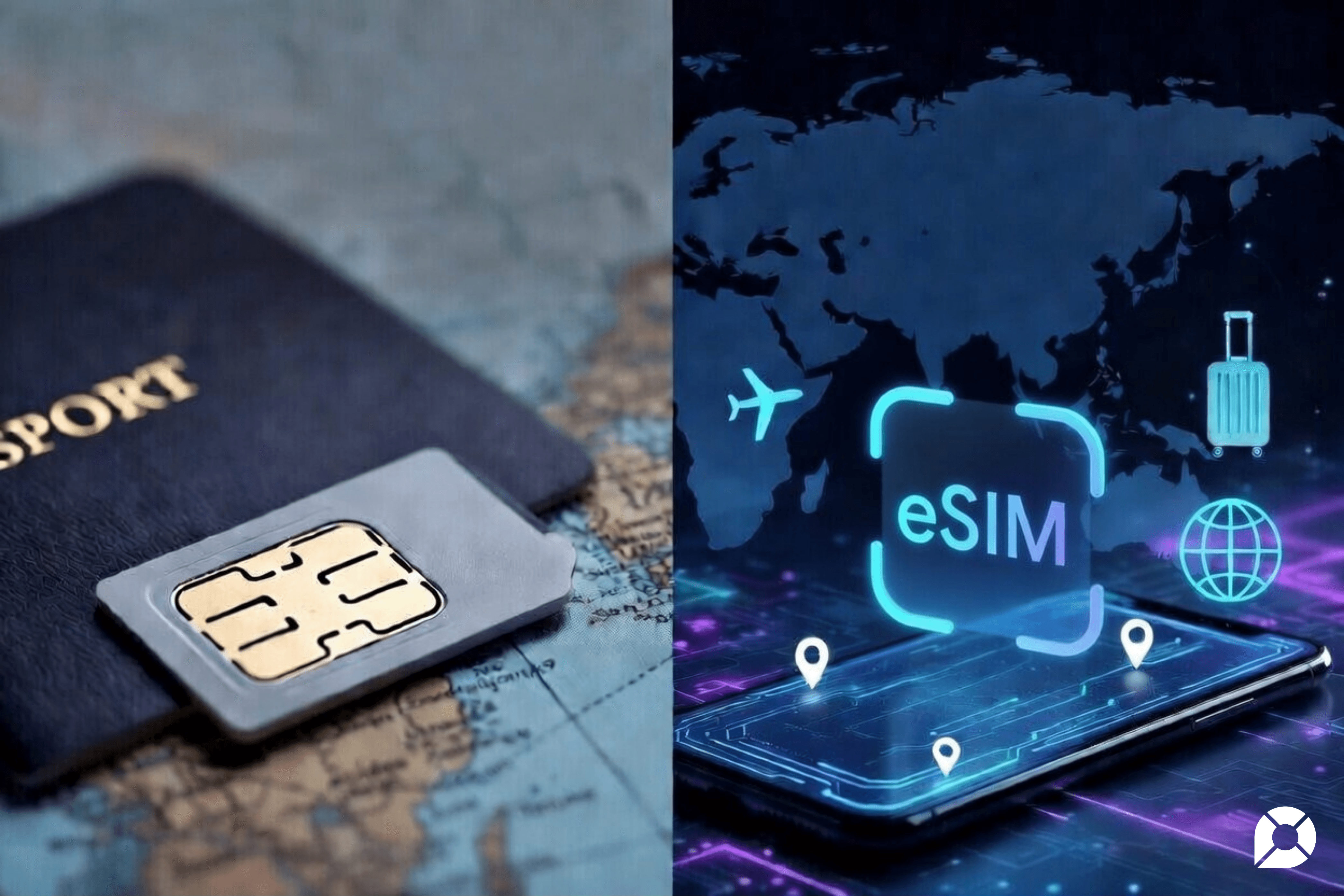
Standing in an airport terminal at 2 AM, desperately searching for an open SIM card kiosk while your Uber driver waits outside? You're not alone. Millions of travelers face this exact scenario every year, wondering if there's a better way to stay connected abroad. The answer lies in understanding the real differences between eSIMs and traditional SIM cards for international travel.
What Are eSIMs and How Do They Work?
An eSIM (embedded SIM) is a digital SIM card built directly into your phone. Instead of inserting a physical plastic card, you download your mobile plan digitally. Think of it as the Netflix of mobile connectivity – instant, digital, and accessible anywhere with an internet connection.
Here's how it works: You purchase a data plan online, receive a QR code via email, scan it with your phone's camera, and you're connected. The entire process takes under 5 minutes from purchase to active data connection.
Traditional SIM cards require you to physically visit a store, wait in line, provide identification, and manually swap out the tiny card in your phone. If you lose it, you're back to square one.
The Real Cost Comparison: eSIM vs. SIM Card
eSIM Costs in 2026
- Europe: Starting from $4.99 for 1GB/7 days
- USA: Starting from $5.99 for 1GB/7 days
- Australia: Starting from $7.99 for 1GB/7 days
- Asia: Starting from $3.99 for 1GB/7 days
Local SIM Card Costs
- Purchase price: $5-15 for the SIM card itself
- Data plans: $10-30 depending on the country
- Hidden costs: Airport markups (often 50-100% higher), taxi fare to find stores, time spent searching
The math is simple: eSIMs often cost the same or less than local SIM cards, without the hassle and hidden expenses.
Convenience Factor: Why eSIMs Win for Travelers
Before You Travel
eSIM: Purchase your plan from your couch. Receive the QR code in your inbox within 5 minutes. Install it before your flight and activate when you land.
SIM Card: Hope there's a store open when you arrive. Carry your passport for ID verification. Pray they speak English and accept your credit card.
At Your Destination
eSIM: Scan, activate, connect. You're online before you clear customs.
SIM Card: Find a store, wait in line, fumble with tiny cards, risk dropping your original SIM in a foreign airport bathroom.
Multiple Destinations
eSIM: Keep multiple plans on your phone. Switch between them with a few taps.
기기 브랜드를 선택해 주세요:
SIM Card: Carry a collection of plastic cards. Hope you don't lose them. Remember which one works where.
Device Compatibility: What Phones Support eSIM in 2026?
iPhones with eSIM Support
- iPhone 12 and newer (including all variants)
- Phone SE (3rd generation)
- iPhone 11 series
- iPhone XS and XR series
Android Phones with eSIM Support
- Google Pixel 7 and newer
- Samsung Galaxy S22 and newer
- OnePlus 11 and newer
- Most flagship Android phones released after 2022
Checking Your Phone
Go to Settings > General > About on iPhone, or Settings > Connections > SIM card manager on Android. If you see "eSIM" options, you're ready to go.
The Dual SIM Advantage: Keep Your Home Number Active
Here's where eSIMs shine brightest. With dual SIM capability, you can keep your home number active for calls and texts while using an eSIM for data abroad. Your family can still reach you on WhatsApp, your bank can send verification codes, and you avoid the "sorry, I had a different number while traveling" conversations.
Traditional SIM cards force you to choose: stay connected to home or get local data. eSIMs let you have both.
Speed and Reliability: Network Performance Comparison
eSIM Network Quality
Modern eSIM providers partner with top-tier local networks in each country. You get the same network quality as local carriers, often connecting to multiple networks for better coverage.
Local SIM Network Quality
You're locked into one carrier's network. If their coverage is poor in your area, you're stuck until you can buy another SIM card.
Connection Speed
Both eSIMs and local SIM cards use the same underlying network infrastructure. The speed difference comes down to the specific carrier and plan you choose, not the technology itself.
Security and Safety Considerations
eSIM Security Benefits
- No physical card to lose or steal
- Remote management through your device settings
- Encrypted digital provisioning
- Easy to disable if your phone is stolen
SIM Card Security Risks
- Physical cards can be lost, stolen, or damaged
- SIM swapping attacks at local stores
- Carrying multiple cards increases loss risk
- No remote management capabilities
When SIM Cards Still Make Sense
Despite eSIM advantages, traditional SIM cards work better in specific situations:
Older Devices: If your phone doesn't support eSIM, you need a physical card.
Long-term Stays: For trips longer than 30 days, local SIM cards might offer better value on unlimited plans.
Voice-Heavy Usage: If you need to make many local voice calls, some local SIM plans offer better rates.
Backup Option: Carrying one physical SIM as backup isn't a bad idea for extended travel.
Real Traveler Scenarios: Which Option Wins?
Business Traveler (3-7 day trips)
Winner: eSIM Time is money. Getting connected in under 5 minutes vs. spending an hour hunting for SIM cards makes eSIM the clear choice.
Digital Nomad (1-3 month stays)
Winner: Hybrid Approach Start with an eSIM for immediate connectivity, then evaluate local SIM options for longer-term value.
Vacation Traveler (1-2 weeks)
Winner: eSIM Simplicity wins. Spend your vacation time sightseeing, not SIM card shopping.
Multi-Country Trip
Winner: eSIM Regional eSIM plans cover multiple countries. No need to buy new SIM cards at each border.
How to Get Started with eSIM Travel
Step 1: Verify Compatibility
Check if your phone supports eSIM and is unlocked from your carrier.
Step 2: Choose Your Plan
Select a data plan that matches your destination and usage needs.
Step 3: Purchase and Install
Buy your plan online, receive the QR code via email, and scan it to install.
Step 4: Activate on Arrival
Turn on your eSIM when you land and connect instantly.
For travelers ready to ditch the SIM card hunt, Destination Sim offers eSIM plans for 195+ countries with 5-minute email delivery and plans starting from $3.99. You'll be connected before you clear customs.
The Bottom Line: eSIM vs. SIM Card in 2026
eSIMs win on convenience, speed, and flexibility. They cost about the same as local SIM cards but save you time, stress, and the risk of losing tiny plastic cards in foreign countries.
SIM cards still have their place for specific use cases, but for most international travelers, eSIMs offer a better experience.
The question isn't really whether eSIMs are worth it – it's whether you want to spend your travel time connected and exploring, or hunting for SIM card stores and hoping they're open.
Ready to stay connected the moment you land? Learn more at destinationsim.com and get your travel eSIM delivered in under 5 minutes.
주제 가이드
eSIM vs 로밍로 돌아가기다음 글
관련 가이드
Travel eSIM vs Buying a Local SIM Card: Which Is Better in 2026?
Compare travel eSIMs vs local SIM cards in 2026. Learn which option offers better convenience, cost, security, and flexibility for your next trip.
Prepaid Travel eSIM vs Carrier Roaming Bundles: 2026 Cost Comparison
Compare prepaid travel eSIMs and carrier roaming bundles for 2026: daily-pass costs, real trip math, throttling, and when each option makes sense—so you avoid bill shock abroad.
Carrier Roaming Fees Explained: Why Your Phone Bill Is So High (and How to Fix It) in 2026
Learn how carrier roaming fees work in 2026, why phone bills get so high abroad, and how prepaid eSIM plans help you avoid bill shock, cruise roaming traps, and hidden data charges.